

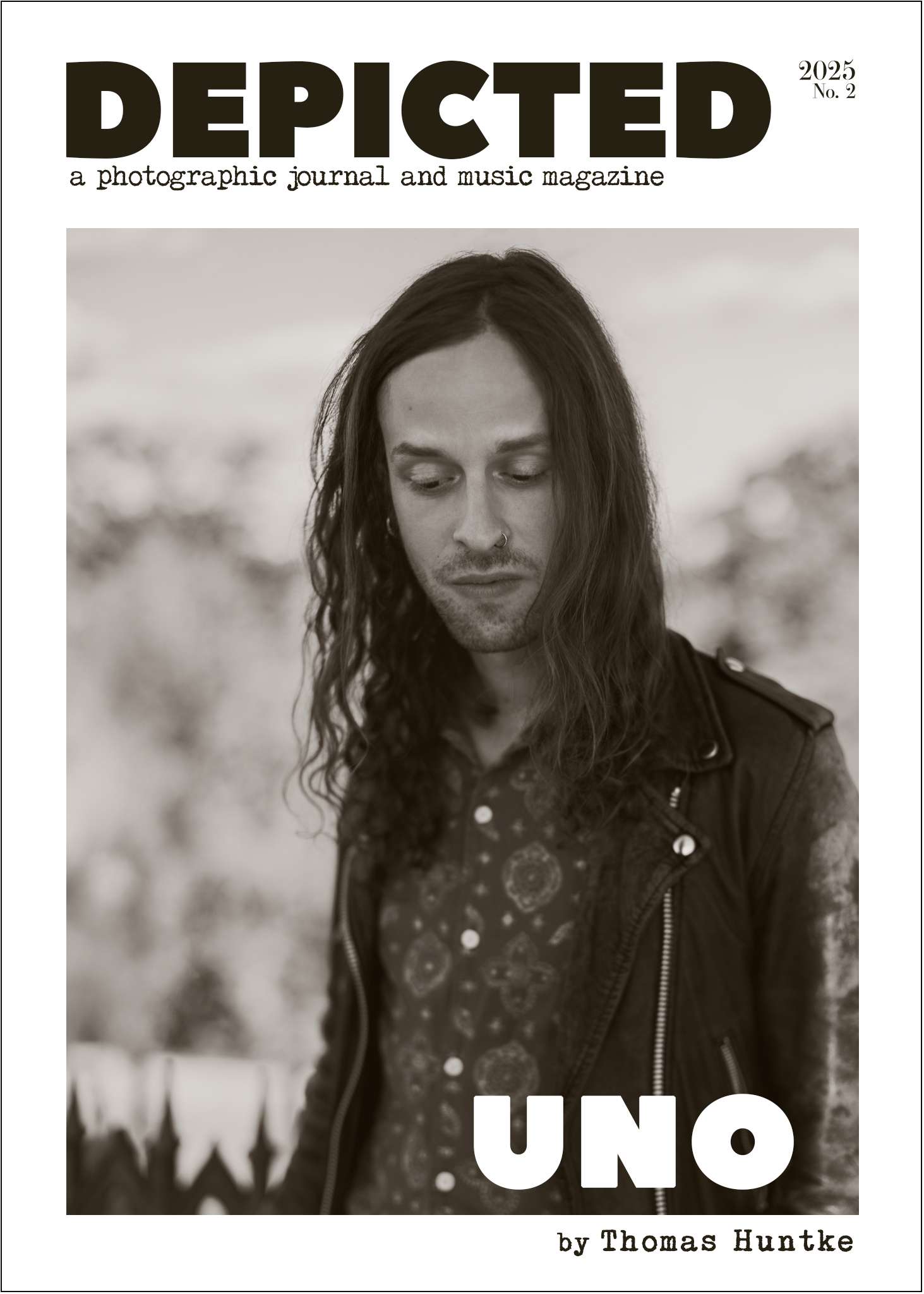
For me, you are the guy who plays in a lot of bands and has a lot of projects. So what are the bands you play in right now? What are you doing right now at the moment?
There are a few things where I am more involved, from the beginning to the end product and then I do a few things where I’m merely part of the performance or where I do more improvisational things. I play with some bands like DELVING or MAGGOT HEART and then I have two projects that are very drum driven. In these projects the drum structures become sort of the riffs. I tweak the drum in a different way, it’s less reactive and more creative.
So you are the songwriter in these projects?
Yes. One of these projects is with my partner Chris, called UNOX, and the other one is my solo project called PERKWUNO.
Let’s start with that one.
This is something that I’ve started a little bit before the pandemic and then I started to do way more when the pandemic hit, because when you are alone with a lot of synthesizers, what are you supposed to do… It started with jamming, and then I started using electronics with that. The first thing I got was this device called the Nord Drum which happens to be an invention of my dad.
So, your father is also a drummer?
My dad is a drummer and synth builder. I started jamming a lot with this device.
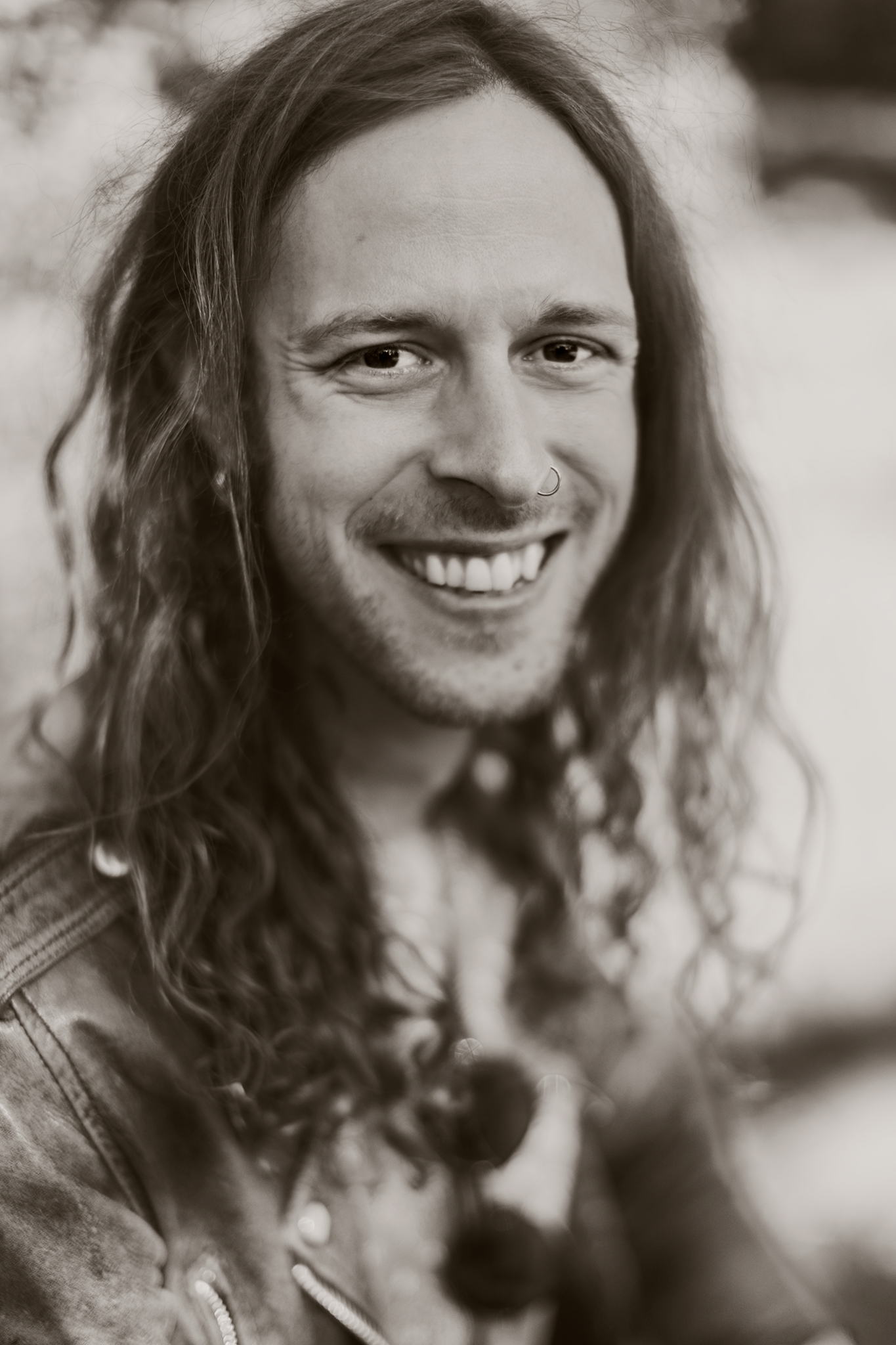
Is it an electronic drum?
It’s a synthesizer primarily catered to percussive sounds. You can play it in a few different ways. In these projects, I use acoustic drums with normal microphones, but also with trigger microphones and pads, to control the electronics like the Nord drums. With the triggers, Instead of just replacing bass drum sounds, I use them to clock sequencers, play samples and melodies. Everything works in hardware-based synthesizers. So, it’s sort of an engineering project in your brain to get this to work. There are not too many products made for this especially. You have electronic drums and stuff like this, but they usually don’t really work in this way. Those are built more to replace acoustic drums. I am using this to become like a band or orchestra, with the drums as a controller.
But it’s still only you.
Yes, it’s only me and if I stop playing everything is silent. But if I hit something, you get a cascade of different things. And then I mix this with the acoustic drums and everything else together into a lot of delays and effects, which sort of merge the electric and the acoustic signals together.
Is it a one take live recording, or do you do overdubs afterwards?
It happens live and post production is mainly mixing. So the work is to make the electronics work together with each other and with you, in the moment. It has become a creative way of practicing drums for me nowadays, where I often have to push myself with independence and the motoric of using the four limbs to pull off the performance I want. I try to search for interesting things that resonate in the rhythmical world. And then I take them into the harmonic world. How do they sound harmonically, these rhythm ideas? Or you can start from the other way around: I have an harmonic idea and how does it sound rhythmically? And how can I then push it to hear it from different angles. Then I started to make compositions with that. I played a few live shows with it and also, shot a video project together with Vortex Era where the vibrations from the synths and drums then triggered geometrical vibrations on a water surface and those then became a video projection.
That’s a nice concept.
This is also something that I can play together with others. I started to do this with my partner, XrysafeniaX, in this band that we call UNOX. Those two projects have a bit of the same creative philosophy in a way. But there are a bit of different paces and different modes. One is maybe darker or sombrer.

So, in UNOX, what does your partner bring into the mix? What’s the extra part then?
The extra part is that she then controls the sounds of the electronics and mixes them with each other. Im basically the clock source for the electronics she plays. It’s a bit like live dubbing. She decides for example when this hit is going through the delay or not. Or she decides what sequence, sample or synth is actually going to be played and heard.
Is it different at every concert or do you also have composed songs?
We have songs too, compositions, but there is always a lot of room for improvisation or chance. Over the course of two years, we have gradually built a set. It’s been fun. We played some nice festivals in Berlin in the summer and that got us a gig now in Uganda. So, we’re going to Uganda in November. This project is dear to me because it’s sort of what I fall back to thinking about, when I lay in bed. It’s the most challenging, and I am also the most nervous about it.
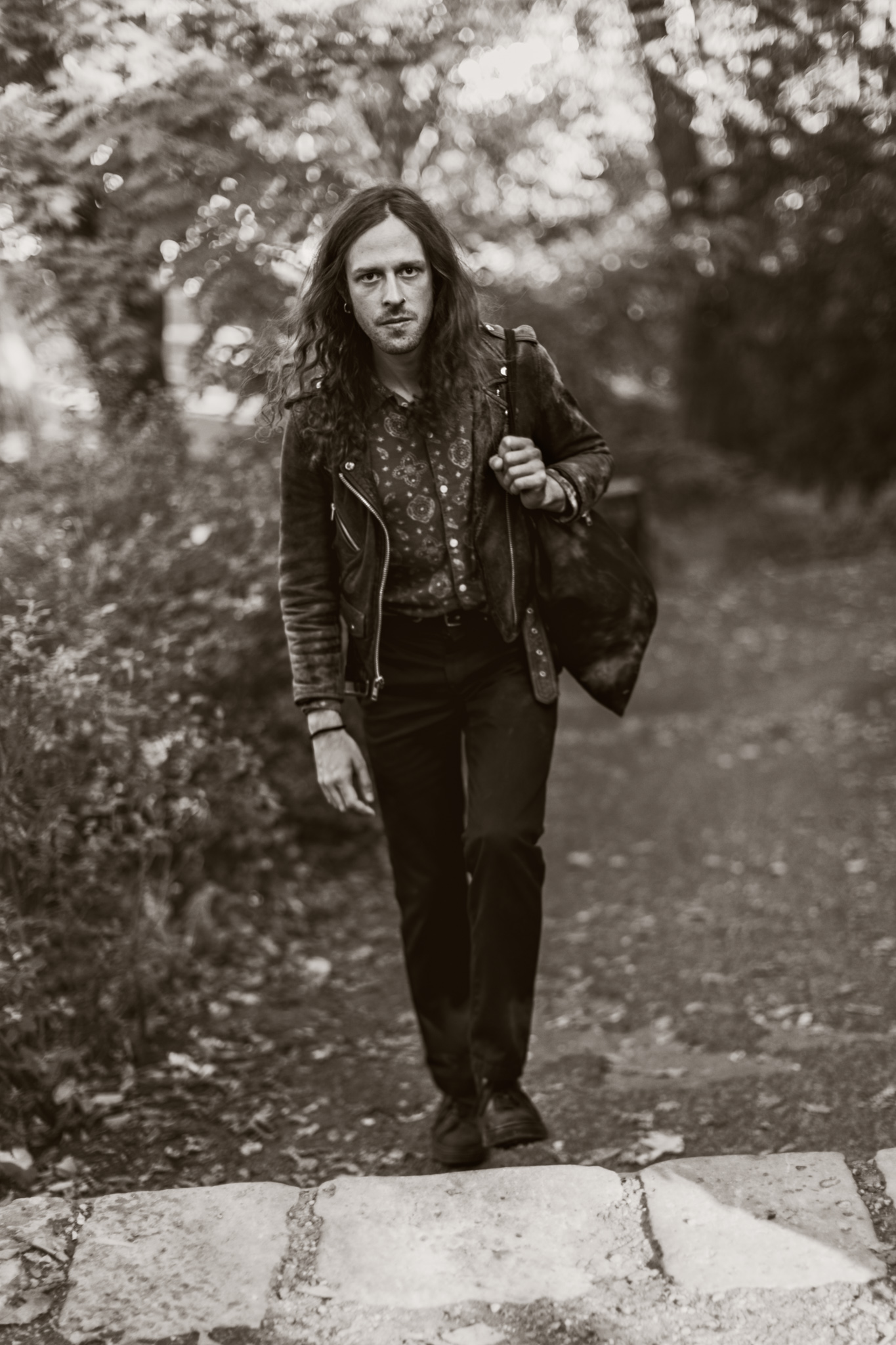
Sure, because it’s your own creativity and you are responsible somehow.
Yes. I really enjoy also playing other people’s music or making music that is not as fundamental to build a drum groove from the beginning.
So that’s sort of what’s going on right. There is one thing that I haven’t talked about yet. As I said, my dad builds synthesizers and now we’re working together with one of his friends, on a new synthesizer. I get to use the ideas and visions of my musical projects to help design something new. We are still in a coding phase; it’s gonna take some more time. But it’s coming together and I’m very excited for that. This is also something that I am thinking a lot about at night. It’s a house of cards; you need to build it perfectly for it to make sense.
Can you give a rough idea how this thing works technically?
It’s sort of an advanced version of the Nord Drum’s concept. More in depth sound design options and it’s more catered to work together with external gear of the more modular kinds. So it is a 4 channel pad and trigger station and a synthesizer with a lot of funny features to modulate the sound with. You can interact with other machines through control voltage, which is called CV. It’s a language that these modular synths can communicate with each other through, based on voltage, triggering a synth to play or telling a knob of a parameter where it should stand.
How do you trigger the voltage?
This can be decided by a sequencer or a drum machine but it’s also what trigger mics essentially do. They send a short voltage pulse, when the drums or pads are hit. The synth receives and filters the voltage and fires off its sound generators and also interprets the velocity of that pulse. In our case, what’s a bit different to other drum pads and drum machines of lately, is the way these sound generators can then be modulated on live, both internally in the machine and through external gear in a bigger modular environment.
The original Nord Drum has been a hit, so hopefully some people will like this one too. We already have prototypes that we are playing around with now, but hopefully we can show it at the Superbooth here in Berlin, which is an expo of electronic music instruments.
Will you produce it yourself or are looking to cooperate with some bigger manufacturers?
No, that’s the thing, this time we are going to do it all independently.
But then you need someone to manufacture it?
No, we can build it by hand, every unit.
What size is it?
It’s like a small drum pad station, so you can get it with pads and play it that way. You can also put the module, without the pads into a modular format called Eurorack. You have seen drummers with pads, right? So, it is one of these products, but a bit more for the experimental approach. Usually those pads are sample pads, they play a sample, something that you already recorded and maybe you modulate on it. But this is a synthesizer, so it generates synthesis.
Actually, I was not very interested in electronic instruments and stuff until maybe like 2017/18 or so. But then it has grown into an obsession. It takes such a different angle to music somehow. Especially the modular world, when you start grasping all the different terminologies and what they do. It’s sort of a metonym for life often. You can philosophize on how the world works, how your synthesizer works, or how relationships work, or anything else. I think that a lot of people see and use it as some kind of mirror.

Also, in this kind of music, there is still so much room for innovation. I have a feeling that lately in rock music there’s not much innovation going on at the moment.
That’s true. I think it is a purist kind of thing and I’m also guilty, I also like my death metal very pure, I don’t like it too much mixed in with other things. I mean, I’m happy every time I’m proved wrong with that. But it’s built into the community, this purist approach. And I think that doesn’t contradict being influenced by other things. You see, if we go back to rhythm, how drummers play now is so often influenced by sequenced drums. And it becomes this resonance thing where you start influencing each other and I think that’s where innovation goes forward in music overall. When things play off each other in that way.
There is a sequencer style called euclidean rhythms for instance. It’s a style of sequencer that’s built on an “algorithm” of how to structure nodes, in a cycle of cells. Although I don’t think it’s fully applicable for a drum set, I can tell when a drummer has been inspired by that. I wouldn’t even say that a computer came up with it, it’s like nature itself came up with it somehow. And then you then start applying it in new organic situations. I have some examples: With PERKWUNO, for instance, some of the compositions are happening in that way. I experiment with an idea and see how the outcome is. One thing that I’ve been playing around in doing justice to physics by trying to match the pitch of a drum or the pitch of a voice compared to what is rhythm. Let me explain this: If you actually look at rhythm, the rhythmic interval is the same as a pitched interval in its physical sense. So double tempo is the same as an octave. You know what an octave is?
I know what an octave is, it’s the pitch. But the rhythm, it’s an interval, while the pitch is static.
Exactly. If you take two sound sources and they play in a ratio of 1 to 2, then the second one has the double tempo of the first. If you then start speeding them up, but you keep that ratio, and you continue to play them faster and faster, after a while they become just pitch in the end, because everything is so fast that it becomes an oscillator.
Okay, yes, because it is a certain frequency.
Exactly. So, if the rhythm becomes a pitch and you speed up double time, the resulting sound is an octave higher.
I see.
Each interval can be expressed as a ratio then. And each ratio can be expressed as a rhythm. The octave is the simplest harmonic interval that we can find. The second hardest rhythm then is the fifth, which is the second most harmonious pitch interval that we have and then it continues like that. So, the really dissonant ones are very complex polyrhythms. For example, nine over eight is a harder one, and so on.
I started to compose with these parameters. You play these polyrhythmic structures, but then you pitch them. It sort of feels like a scratch lottery.
So, it’s a lot of thinking. It’s like mathematics.
Yes, it’s a lot of thinking. In this part I then program it and then I listen to it for a long time and then I learn it. I have done a few of these. It’s one of the sides of composing for this project, I guess.
It’s a totally different approach than in a rock band.
Yes, I mean, you can do the same thing there, but it caters more to this reaction, building over something. You keep working on something that I had some idea of how it will sound and then I keep digging for that resonance there.
It feels new somehow and so old at the same time. It’s so much more indirect somehow, but so much more in the moment when you get to a certain place with it, because then you can master a whole composition. But it’s so different.
I went to music school for nine years. In this school there were only musicians. You had like 15 drummers, 20 guitar players, 15 bass players, some keyboard players and singers and some brass instruments. It was 2008, when I graduated, and during those years no one mentioned anything of this kind of music. Everything was so performative and like sportive in that sense. This now is something completely different.
So maybe when you master this, you can go back to this school and become a teacher.
I mean, I do teach drums. So, it’s not too far off. I have some students who are coming because they know that I’ve worked with electronics a lot and they maybe don’t even want to learn to play drums. They want to learn sequencing drums better as a drummer.
To wrap this up, let me end with a very trivial question: Who is the best drummer in the world?
I definitely had a bunch of drummers that inspired me in different times. However, there is one that I hold very dear and that is Jaki Liebezeit from Can, and his solo works. He built a whole system around rhythms in his own way as well. Of the things that I’ve talked about today, I think he’s the most relevant drummer.
Check out PERKWUNO and UNOX on:
Bandcamp: SOUNDCLOUD
Instagram: PERKWUNO on INSTAGRAM
Instagram: UNOX on INSTAGRAM
Thanks to Ezio Sabottigh for proofreading.
(C) DEPICTED Magazine October 2025
No usage of the photos without permission.
Read on:

Interview with Sara from MESSA / DEPICTED #1
Your tour with SABBATH ASSEMBLY has just finished. When you come back home after such a long tour, is it a relief or are you rather sad? Both of them. Being on tour is as much fun, and as......

Interview with Toni from (Dolch) / DEPICTED #1
ENNIO MORRICONE – “Once Upon A Time In The West” [from the 7”, 1968 / German: “Spiel mir das Lied vom Tod”] This is one of my first childhood memories: There is a man hanging on the gallows, standing on......
Interview with Justin Sullivan from NEW MODEL ARMY / DEPICTED #1
Last night you played at a festival dedicated to world peace. Did you ever believe in such a thing? I read somewhere that some historians did some research. In the total of human history there had been a period of......
Interview with Alex Ithymia from SUNSHINE & LOLLIPOPS and BHNP / DEPICTED #1
So let’s switch to English now. I am very curious about your accent. It’s horrible. Ever heard THE SCORPIONS speak English? I am slightly better than Rudolf, but not much [laughs]. It’s a bit strange to talk to a......
Interview with Shazzula from Wolvennest / DEPICTED #1
Shazzula is an interesting name. Where did you find the inspiration for it, and does it have a meaning? Well, in the early days of Napster, I spent some time there exchanging musical interests with some people. Everyone was......
Interview with Marcelo Aguirre from EVIL SPIRIT / DEPICTED #1
You are one of the people with the most diverse taste in music that I know. From metal to jazz to experimental and electronic music, you listen to everything. Was it like this from the beginning, or did it......

Photoshoot with LAUREN RUTH WARD/ DEPICTED #1
Unfortunately there was no time to do an interview, so this is a photo gallery feature. Enjoy. See the complete set of photos with Lauren in fullpage size in the print issue of DEPICTED. Get your copy......

Interview with Malte from NECROS CHRISTOS and SIJJIN / DEPICTED #1
The era of NECROS CHRISTOS is coming to an end. You released the last album and now you are playing the last concerts. Have you already reflected on a personal conclusion to this project? What were your highlights and......

Interview with EVILYN FRANTIC / DEPICTED #1
I heard this story once, that when you started your life as an artist, you ran away with the circus. Is this true, or is it just a legend? No, it is very true. I kind of ran away......

Interview with Lupus Lindemann (KADAVAR) / DEPICTED MAGAZINE Oct 2023
What do you want to talk about? Difficult question… In any case, I have never started an interview this way. [laughs] Normally you have your answers laid out already, and you know what you want to say. You meander......
Interview with Yvonne Ducksworth (TREEDEON) / DEPICTED MAGAZINE Nov 2023
What do you want to talk about? I do have one thing that I do want to get right out there. Something that obviously has to be said. Everybody should wake up and start doing their part, no......

Interview with S. M. from E-L-R / DEPICTED MAGAZINE Jan 2024
What do you want to talk about? This is a difficult question. A very open one. What´s on your mind these days? A lot. The world-weariness is very present with me. On the one hand it’s the ongoing......
Interview with Joshua Murphy | April 2024
You are from Australia. How did you grow up there? I was born in what is known as rural Australia, about 100 kilometres outside of Melbourne in a place called Tourello. There is nothing there. I was raised......

Interview with Michela from APTERA | April 2025
What do I want to talk about? Uncomfortable topic! Lately I was talking with some friends about how, especially in the country where I’m from [Italy], even if you are an agnostic adult person, religion has been, at......

Interview with Uno Bruniusson (Perkwuno, UnoX, Maggot Heart, Delving) | October 2025
For me, you are the guy who plays in a lot of bands and has a lot of projects. So what are the bands you play in right now? What are you doing right now at the moment?......
DEPICTED LIVE! – SIJJIN | Berlin, September 2025
DEPICTED LIVE! is a new category on this website, where I present some portrait photos that I shot at live concerts. I’ll kick off this new post format with mighty SIJJIN, live at Neue Zukunft in Berlin, September 28th, 2025.......

Sorry, the comment form is closed at this time.