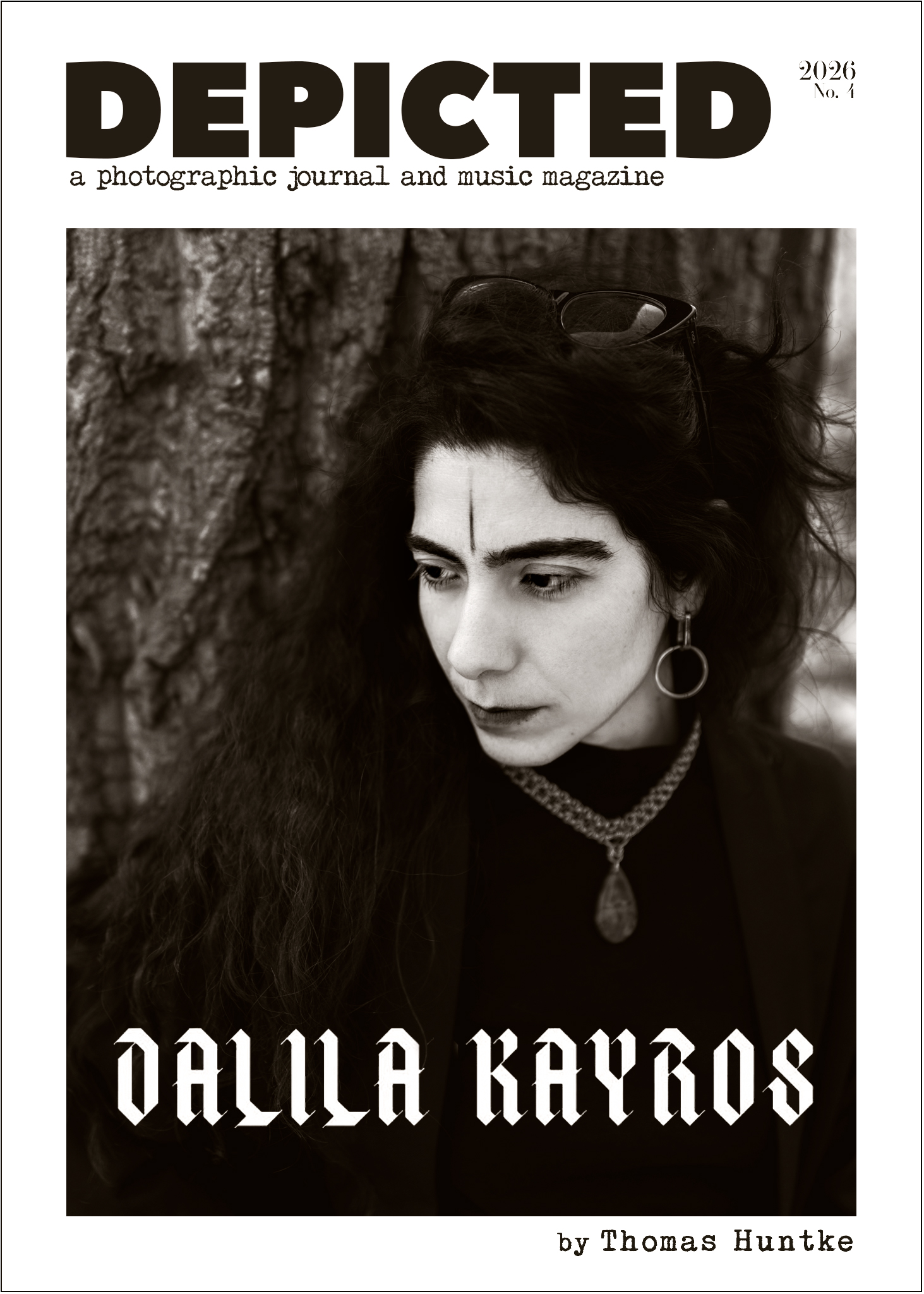
Interview with DALILA KAYROS | August 2026
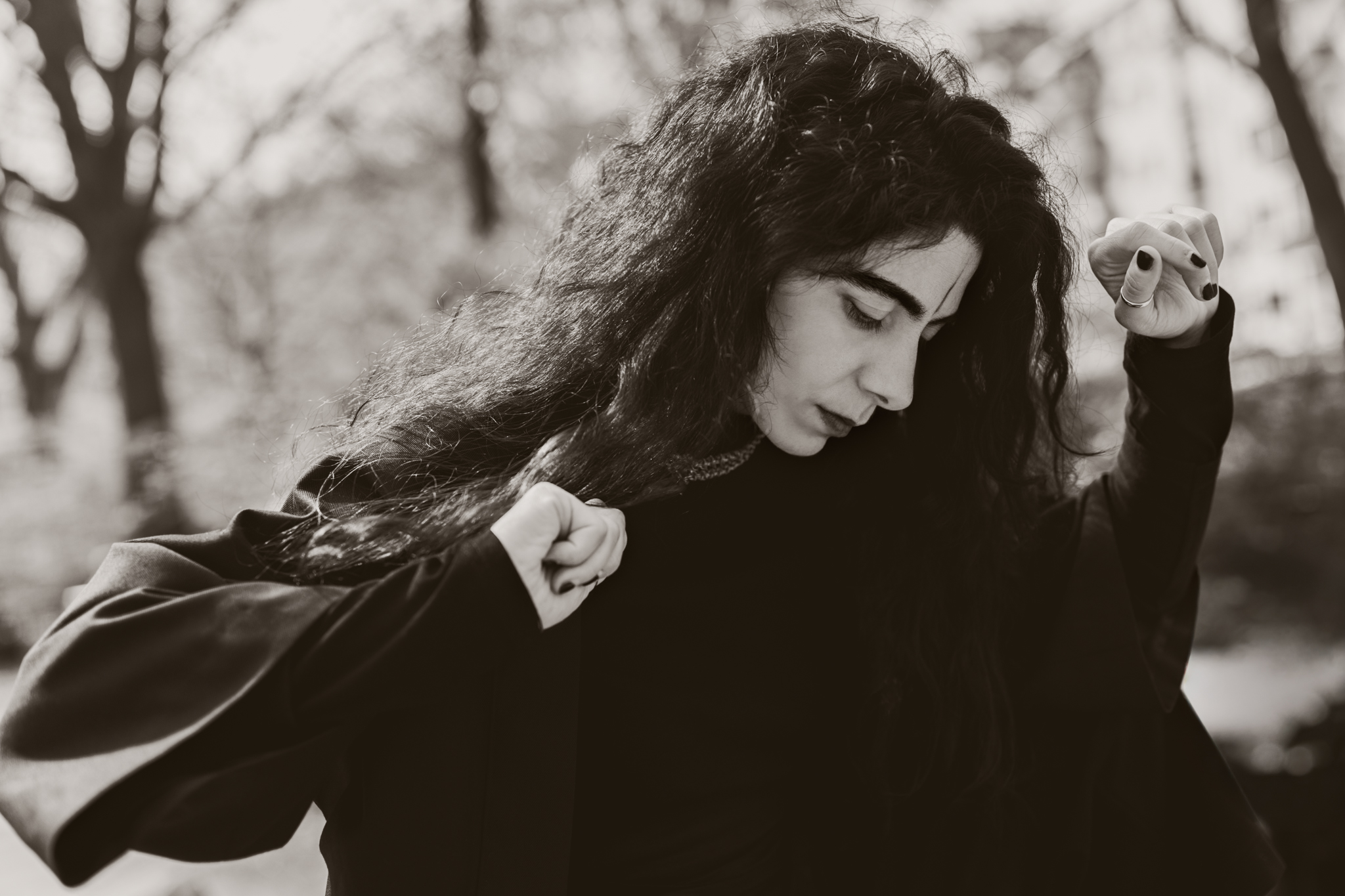
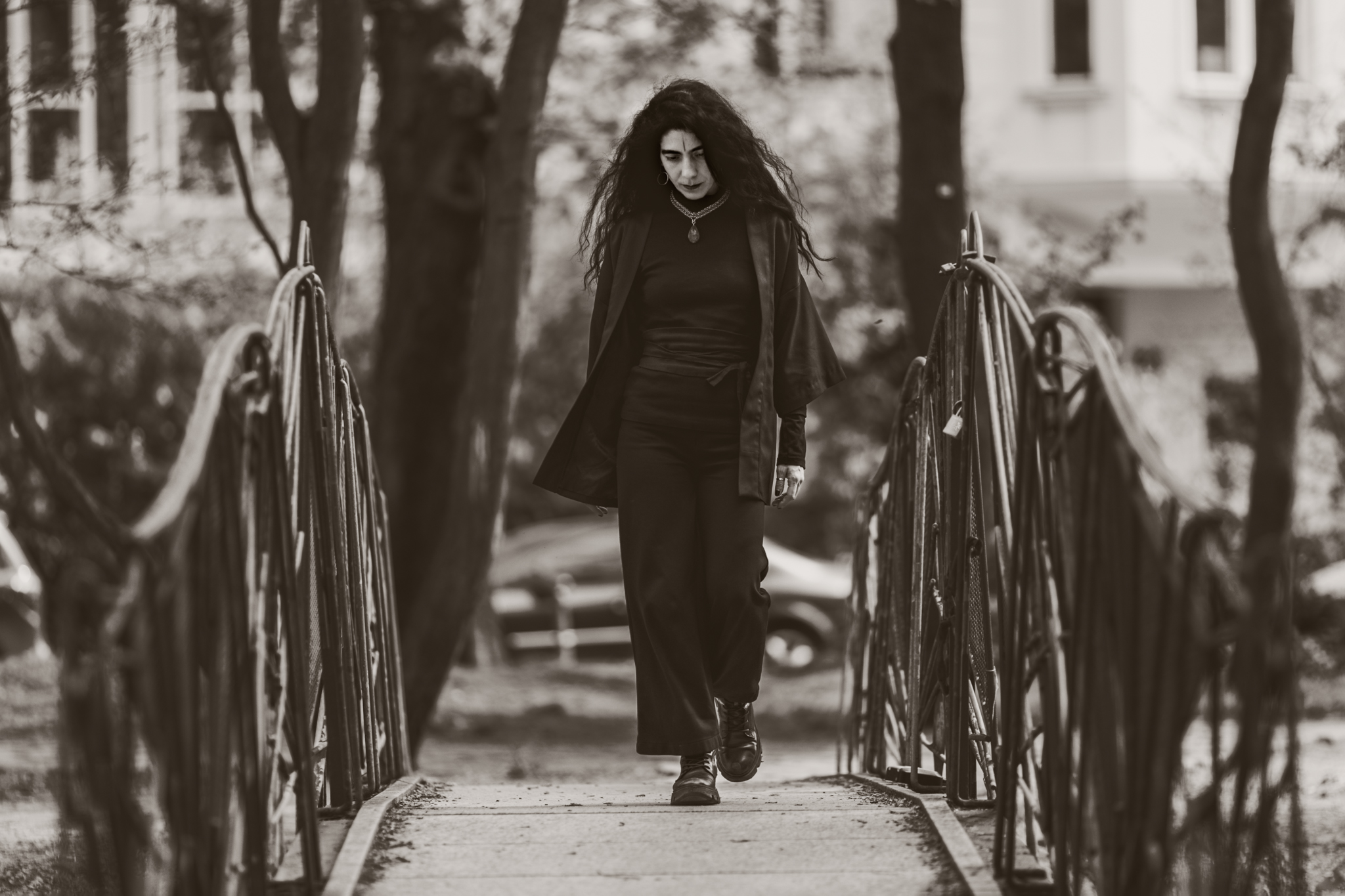
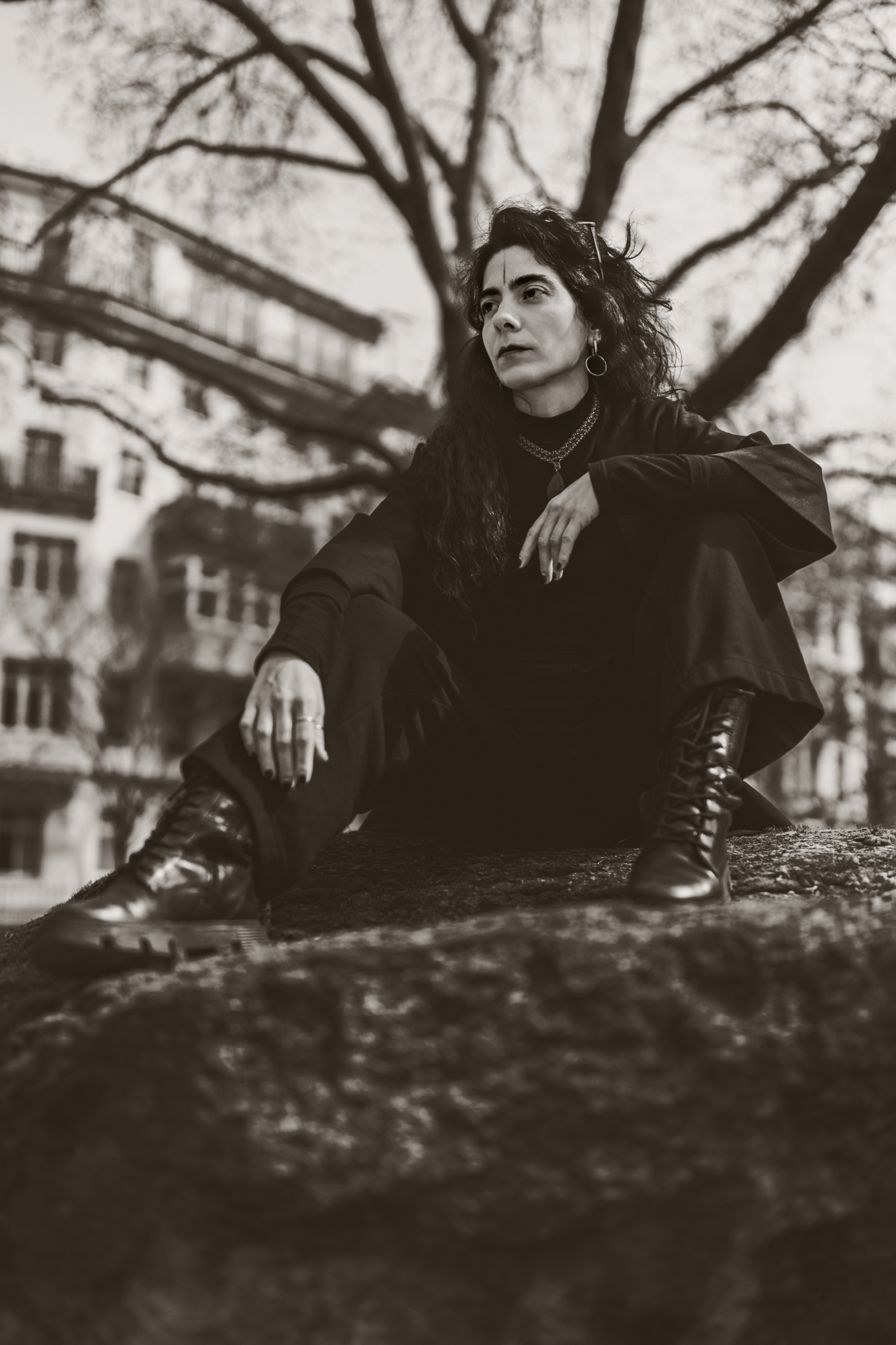
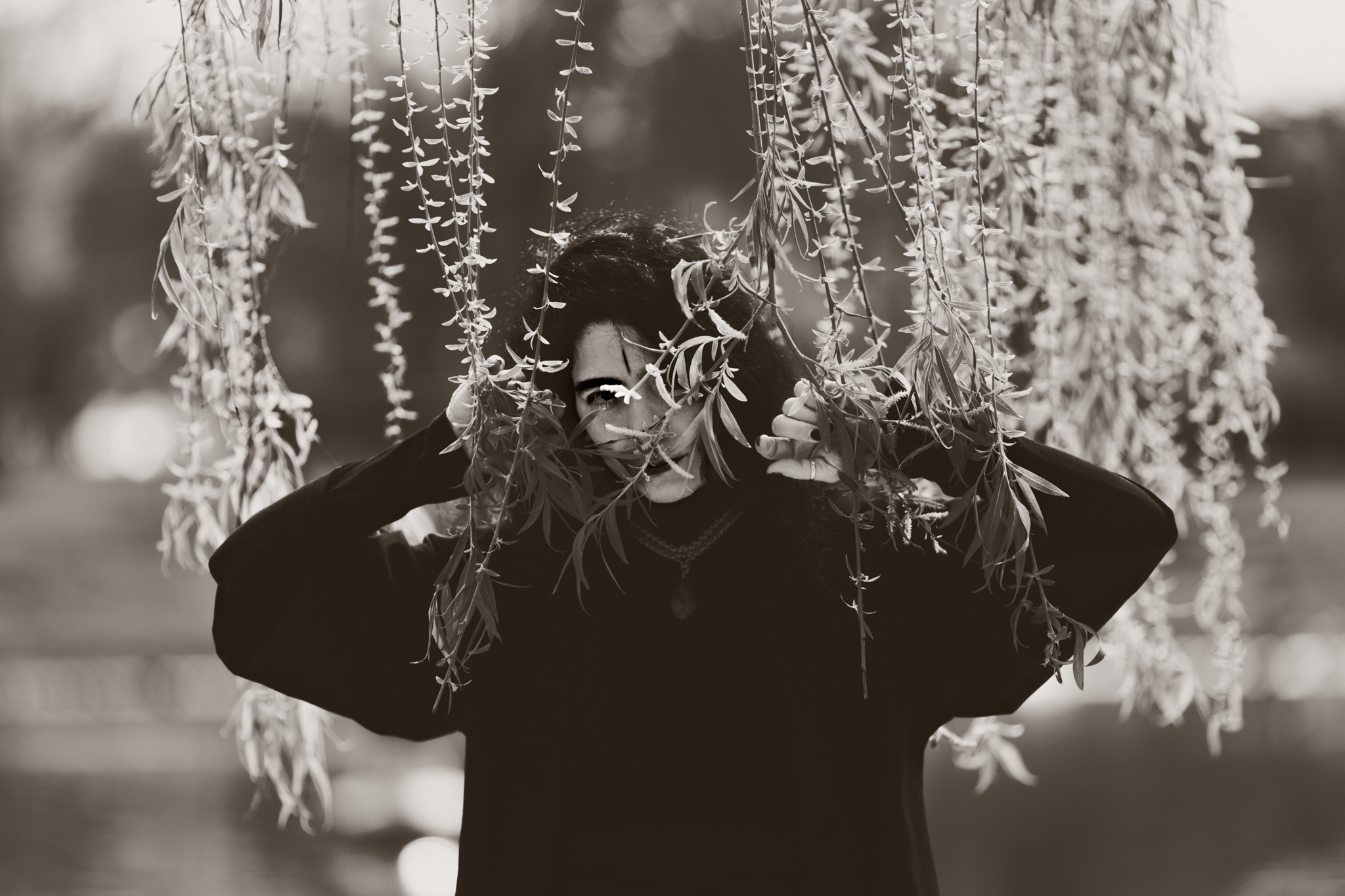
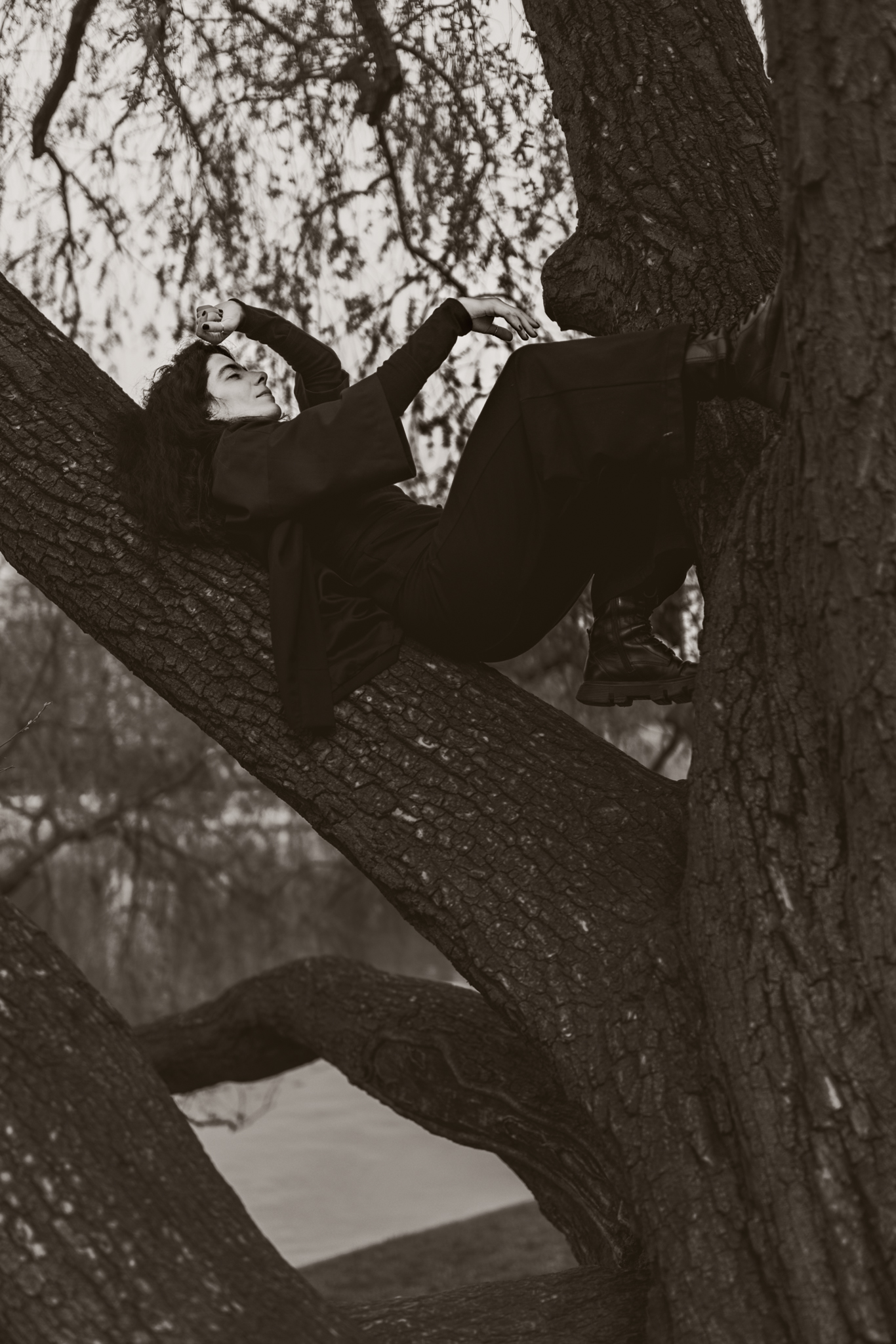
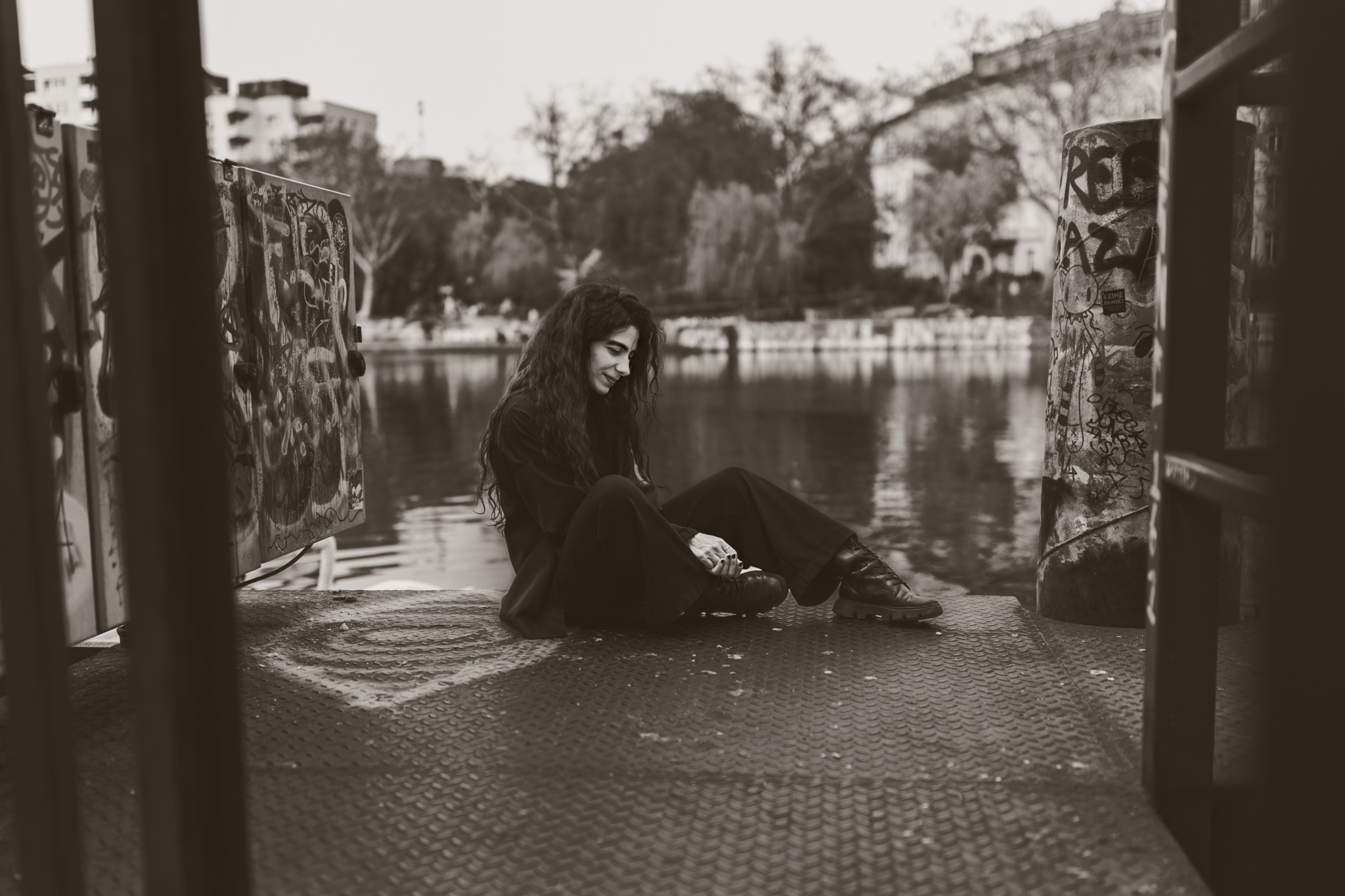
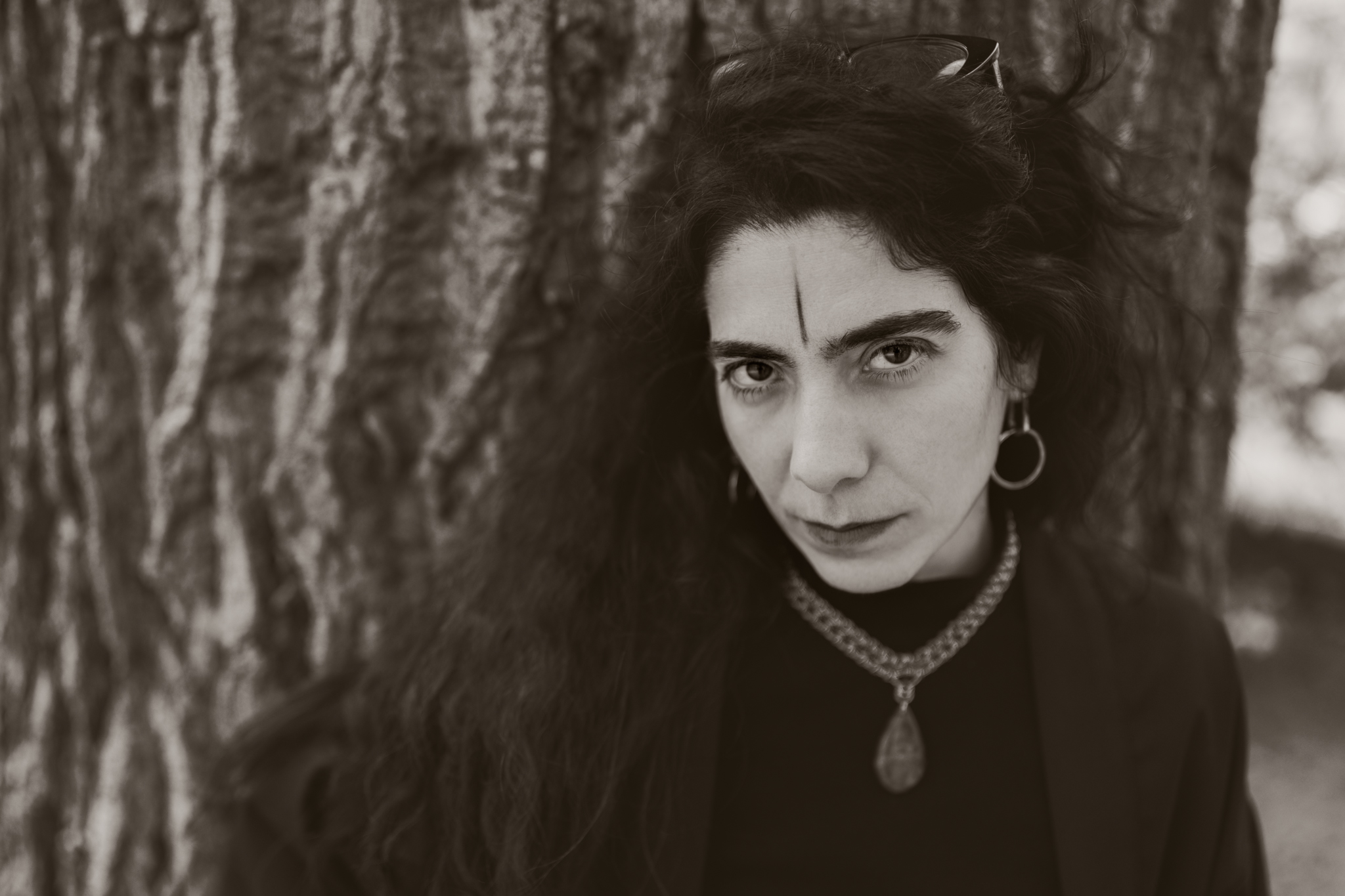
On a nice sunny afternoon I met Dalila and her partner Danilo in Kreuzberg. They are musicians from Sardinia, which is one of my favourite travelling places. We took a walk from Oranienplatz through the old, abandoned canal towards Landwehrkanal where we spent most of the time for the photoshoot. Of course not without stopping at the ice cream shop at Admiralsbrücke. Afterwards we tried to find a quiet spot for the interview which wasn’t so easy in this busy part of town.

You are from Sardinia. Can you tell us a little bit about the music scene in Sardinia. What is it like?
[Danilo]: I’d say there’s a pretty lively scene here, made up of two different attitudes. One is music made for the territory itself, self-referential, either in a traditional way or simply built on an aesthetic of “Sardinian things”. The other kind of music is not that conservative; it looks beyond the boundaries of the island itself. That’s probably the one we’re part of.
[Dalila]: It’s a scene that mixes Sardinian attitude and tradition with more contemporary and electronic music. But it’s more complex than that, because a lot of what we now call ‚traditional‘ Sardinian music is, in a way, a construct, not the music itself, but how it was codified and turned into a symbol of regional identity.
Practices like cantu a tenore, the polyphonic throat-singing, or the launeddas, the reed instrument, are genuinely ancient, they’re documented well before the 20th century. What changed is, that starting in the late 19th century, and especially under Fascism before World War II, there was a broader Italian project to define and standardize regional folk identities. Sardinia’s music got framed and packaged as a symbol of the island’s uniqueness within that process.
And it didn’t stop there — it kept evolving through the postwar decades, and especially during the folk revival of the 1970s, which is really when a lot of what people now think of as ‚authentic‘ Sardinian tradition took its current shape. So the roots are real and old, but the way we experience and label that tradition today is a much more recent invention than people realize.
[Danilo]: There’s a historical reason for that. When Italy in its current form was born in 1861, many parts of it weren’t really Italian. Sardinia was one of the first regions to belong to the new state. The state that unified Italy was even called the Kingdom of Sardinia, although its political centre was Turin, not Cagliari. But the island hadn’t historically been part of Italy, because we were very separate and mostly connected to other parts of the Mediterranean. Our main links to the peninsula were with the people of Genoa and Pisa.
In the preceding centuries we were under the influence of the Aragonese and then the Spanish, and before them Pisa and Genoa, the Byzantines, the Vandals. Before all of them came the Romans, who held the island for centuries and left the deepest mark of all, and before the Romans the Carthaginians and the Phoenicians. We mattered, in a way, because we’re a point in the middle of the Mediterranean where a lot of cultures came together and tried to collaborate or settle. Or we were kicked out.
[Dalila]: The result was a mixture of cultures. But there was a moment in history when the Italians were trying to build an Italian culture and an Italian identity, so every region had to be recognisable through its own strong identity. That’s when the costumes, the dances, the singing and the music were selected, standardised and put on stage as “the tradition”, from the late nineteenth century onwards and then much more systematically under Fascism. Certain forms started to be handed down as the authentic ones. Before that there was far more variation from village to village, and much more improvisation. When the new technology arrived and music could be recorded, the “real” identity, the “real” tradition, started to freeze into a specific shape.
[Danilo]: Those first recordings became the music that people afterwards tried to imitate and repeat over and over, always looking for what the real, original music had been.
[Dalila]: But there’s no single original to find. Some of the repertoire has strict rules, yet even there the music lived through variation, and the sung poetry was improvised on the spot. So what is now regarded as identity and tradition is often just the version that happened to be recorded first.
[Danilo]: Today there are a lot of musicians working in that idiom, but only in Sardinia, because it only has value there. A more modern approach would be to take these forms and use them repetitively alongside other kinds of forms. I can take a part played on the accordion, which counts as traditional here even though it only arrived in the late nineteenth century, tonal, pentatonic or whatever, and put it over a reggae rhythm or an electronic beat, and mix the two together.
[Dalila]: That ends up sounding like a crossover, like world music. There are many scenes in Sardinia. That’s one of them, but there’s also a very strong and active experimental scene, with electronic music and acoustic instrumental improvisation.
[Danilo]: Or audiovisual experiments. There are a lot of very small places around the island running extremely experimental shows in tiny villages. They do it not for business, of course, but out of interest, and to keep the culture alive. There’s a lot to discover in this field on the island; it’s very interesting. In Cagliari there are many small spaces. They put on events for 20 or 30 people, sometimes 50 to 80, so they’re really not commercial venues. Most of the time it’s a bike workshop, a little gallery or a coworking space. A lot of DIY.
[Dalila]: Also, there is a very strong hardcore and metal scene. I think there is a lot of music in Sardinia. It’s a small place, but very alive, you know. Our music is kind of electronic. We don’t bring inspiration from what is called ‘tradition’.
[Danilo]: We don’t want to be part of a stereotype, so we try to avoid as much as we can anything that could come across as recognisably territorial, flag-waving music. That’s what we don’t like.
[Dalila]: I do use the Sardinian language, but only because it feels authentic to me. In my writing I mix Sardinian and Italian, and also pure phonemes, because we improvise a lot. It’s my way of taking my language and playing with it, having fun with the sound of it. Sometimes I also feel free just making sounds with my voice, like an instrument. So from the tradition, I think what we take is free improvisation and the language.
So, you improvise in the studio. Do you also improvise live on stage?
[Dalila]: It’s a mix. When we play together we improvise a lot, and some of the improvisations we come up with later turn into structured songs. And when we play those songs, we often start inserting variations again.
[Danilo]: For example, at the concert we played yesterday, all the songs were from the album. We tried to play the album, so basically everything was structured. There’s one song, “Susneula”, whose middle section leaves a lot of room for improvisation, so we improvise a little with effects and a drone sound. And the very last part of “Khthonie” starts from a
generative patch, which is also improvised in a way, because I manipulate the sounds. That part came out of an improvisation we did on stage before the album; then, in the studio, we remembered it, refined it and turned it into a song. The last song we played yesterday is also still in process. The way we played it was a first: usually we take it more slowly, but yesterday I started with everything already going and opened up the basses, so it was a different approach.
[Dalila]: It was the emotion of the moment. Sometimes we start from zero and take in the energy of the audience, or work from what we’re feeling on stage. Maybe I’m happy or sad or anxious, and then we improvise the emotion of the moment. And that improvising, as I said, can become a structured song later on. We really like being “naked” on stage, pushing the limits of our communication and trying to stay in dialogue, with each other, with the audience, or with something like the energy in the room.
You said you sing in the Sardinian language. What’s the Sardinian language like? Is it similar to Italian? Is it completely different? Is it related to any other language?
[Dalila]: It’s different from Italian, and in many ways closer to Spanish and Catalan.
[Danilo]: Sardinian is a Romance language. It comes from Latin, like Italian or Spanish, but it’s usually described as the most conservative of them all, the one that stayed closest to Latin. Underneath there’s an older layer too, from the language people spoke here before the Romans arrived. You mostly find it in place names and in a handful of words. That older world was the Bronze Age, the Nuragic period, when we were connected to Corsica and to the other side of the Mediterranean rather than to the Latin world.
What strikes an Italian ear is that the central varieties kept the hard consonants, the k and the g before e and i, in words like chentu or chelu, where Italian softened them. People often assume that sounds archaic and pre-Latin, but it’s the opposite: it’s Latin, preserved. In the south, in Campidanese, those same consonants went soft, much as they did in Italian. Then, after the Romans, we were ruled by the Vandals and the Byzantines, and later by the Catalans, the Aragonese and the Spanish, who left a lot in our vocabulary. Some Arabic words came in as well, mostly through Catalan and Spanish and through the medieval raids on our coasts. The Sardinian we speak today in the south is Campidanese. In the centre and further north it’s Logudorese and Nuorese, which kept the oldest and most Latin forms. And in the far north, in Gallura and around Sassari, they speak varieties that actually come from Corsican and Tuscan, because of the centuries under Pisa and Genoa. So there are three or four dialects, and the northern ones are really a separate family.
This is the language we kept from before the Italian influence. They tried hard to erase it. Italian was imposed in schools and courts by the Savoy administration from the 1760s on, and under Fascism speaking it was actively repressed. Now there’s an effort to preserve it and it’s protected by law, but young people in our region don’t know how to speak it.
[Dalila]: In central Sardinia, though, it’s the main language, for young people, children, everyone. The variety I use is from the south, Sardo Campidanese, and as I said it has a lot of words similar to Spanish and Catalan.
[Danilo]: If we speak Sardinian to Italians, they don’t understand a thing. If you speak Sardinian to a Spaniard, you get a lot further.
Do you speak Sardinian also to friends? Or do you speak Italian?
[Dalila]: In the south it’s very common to speak Italian. But part of my family are Sardinian speakers, so I learned it and I’ve heard it since I was born. I use expressions and phrases, but I don’t have friends who speak only Sardinian. It’s difficult. That might change, I don’t know, but the south is very much like that.
The part where I was born, In Northern Germany, we also have our own language. It’s called flat German. It’s also very different. Some words are more English. And my grandparents, they spoke it. My father spoke it with my grandparents. But my generation, they’re not talking anymore. But I can understand it. But I cannot really speak because there’s no practice.
[Dalila]: I think that’s what happened in southern Sardinia. The older generations spoke only Sardinian. Our parents speak Italian and Sardinian, and our generation started speaking half Italian and half Sardinian. Then the newest generation speaks only Italian. But as I said, in central Sardinia all the children speak Sardinian. That’s very beautiful, and it’s important.
For the end, can you recommend some artists from Sardinia we should check out?
[Dalila]: There are many. I prefer to recommend underground artists. Check out UNHOLY IMPURITY, ARTIFICIAL BRIDE, QUERCIA, MEDULLA, RAW, OUTLAST, VULTUR, ILIENSES TREE, GENTILESKY and LERA.
Check out DELILA KAYROS:
Bandcamp: dalilakayros.bandcamp.com
Instagram: DELILA KAYROS on INSTAGRAM
Website: DELILA KAYROS Website
(C) DEPICTED Magazine August 2026
No usage of the photos without permission.
Read on:
Interview with Sara from MESSA / DEPICTED #1
Your tour with SABBATH ASSEMBLY has just finished. When you come back home after such a long tour, is it a relief or are you rather sad? Both of them. Being on tour is as much fun, and as much emotional, as it is......
Interview with Toni from (Dolch) / DEPICTED #1
ENNIO MORRICONE – “Once Upon A Time In The West” [from the 7”, 1968 / German: “Spiel mir das Lied vom Tod”] This is one of my first childhood memories: There is a man hanging on the gallows, standing on his brother’s shoulders, and then......
Interview with Justin Sullivan from NEW MODEL ARMY / DEPICTED #1
Last night you played at a festival dedicated to world peace. Did you ever believe in such a thing? I read somewhere that some historians did some research. In the total of human history there had been a period of four and a half years......
Interview with Alex Ithymia from SUNSHINE & LOLLIPOPS and BHNP / DEPICTED #1
So let’s switch to English now. I am very curious about your accent. It’s horrible. Ever heard THE SCORPIONS speak English? I am slightly better than Rudolf, but not much [laughs]. It’s a bit strange to talk to a German in English. I am......
Interview with Shazzula from Wolvennest / DEPICTED #1
Shazzula is an interesting name. Where did you find the inspiration for it, and does it have a meaning? Well, in the early days of Napster, I spent some time there exchanging musical interests with some people. Everyone was calling me Shazz – Shazza......
Interview with Marcelo Aguirre from EVIL SPIRIT / DEPICTED #1
You are one of the people with the most diverse taste in music that I know. From metal to jazz to experimental and electronic music, you listen to everything. Was it like this from the beginning, or did it develop over time? When I......

Photoshoot with LAUREN RUTH WARD/ DEPICTED #1
Unfortunately there was no time to do an interview, so this is a photo gallery feature. Enjoy. See the complete set of photos with Lauren in fullpage size in the print issue of DEPICTED. Get your copy here: Read on:...
Interview with Malte from NECROS CHRISTOS and SIJJIN / DEPICTED #1
The era of NECROS CHRISTOS is coming to an end. You released the last album and now you are playing the last concerts. Have you already reflected on a personal conclusion to this project? What were your highlights and what were the low points......

Interview with EVILYN FRANTIC / DEPICTED #1
I heard this story once, that when you started your life as an artist, you ran away with the circus. Is this true, or is it just a legend? No, it is very true. I kind of ran away from the life that I......
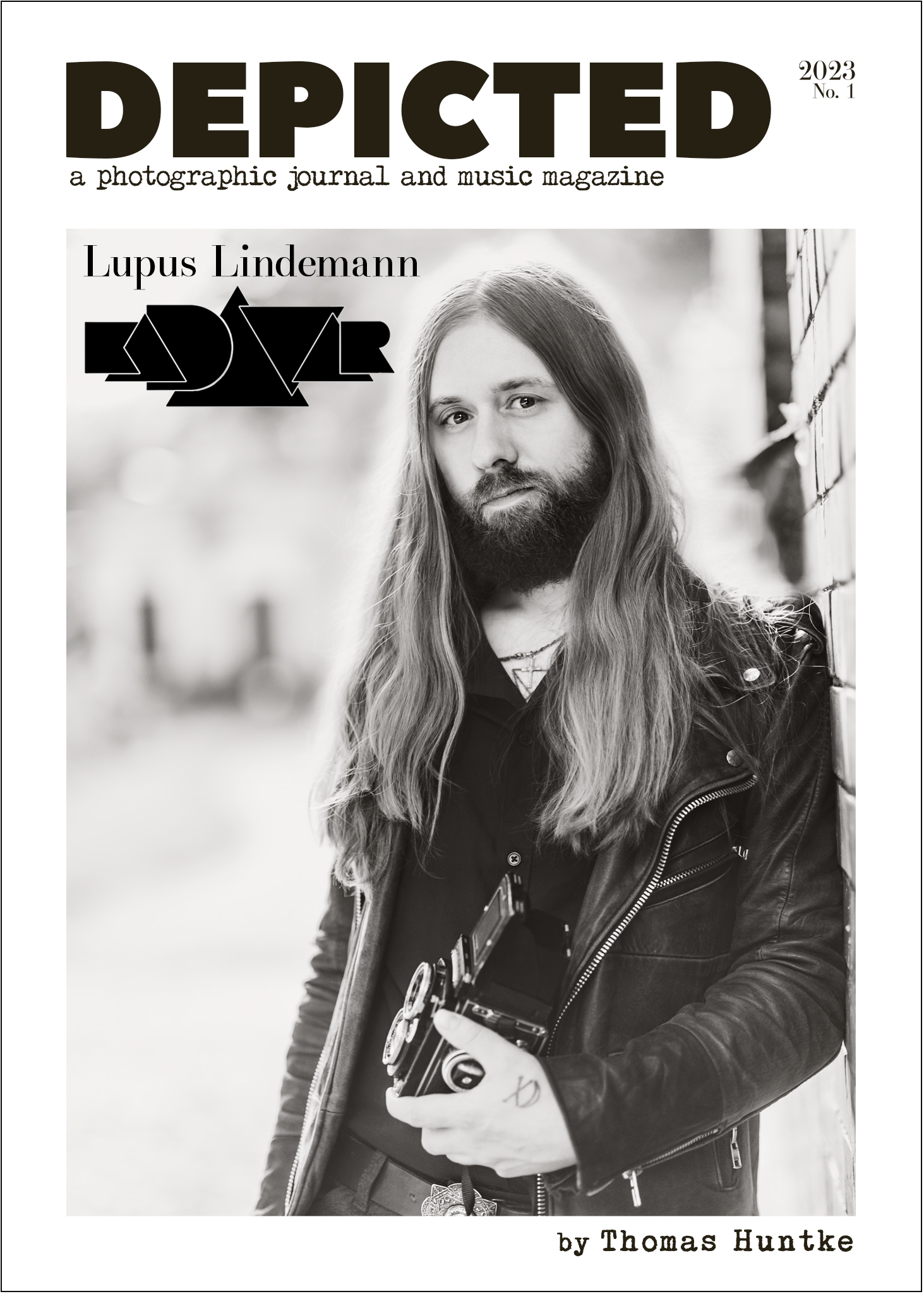
Interview with Lupus Lindemann (KADAVAR) / DEPICTED MAGAZINE Oct 2023
What do you want to talk about? Difficult question… In any case, I have never started an interview this way. [laughs] Normally you have your answers laid out already, and you know what you want to say. You meander your way through it in......
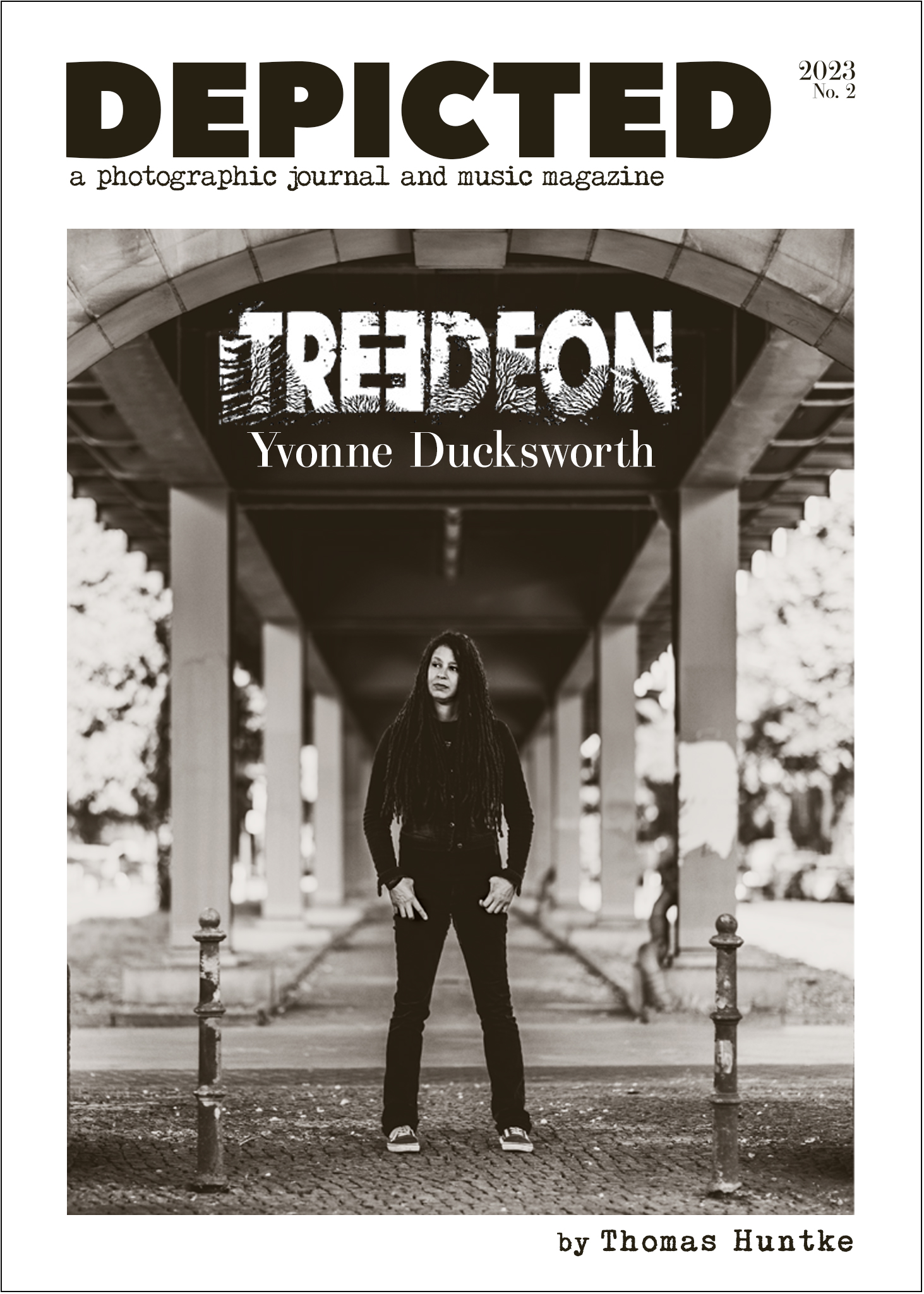
Interview with Yvonne Ducksworth (TREEDEON) / DEPICTED MAGAZINE Nov 2023
What do you want to talk about? I do have one thing that I do want to get right out there. Something that obviously has to be said. Everybody should wake up and start doing their part, no matter how small, to try......

Interview with S. M. from E-L-R / DEPICTED MAGAZINE Jan 2024
What do you want to talk about? This is a difficult question. A very open one. What´s on your mind these days? A lot. The world-weariness is very present with me. On the one hand it’s the ongoing wars, but also the climate,......
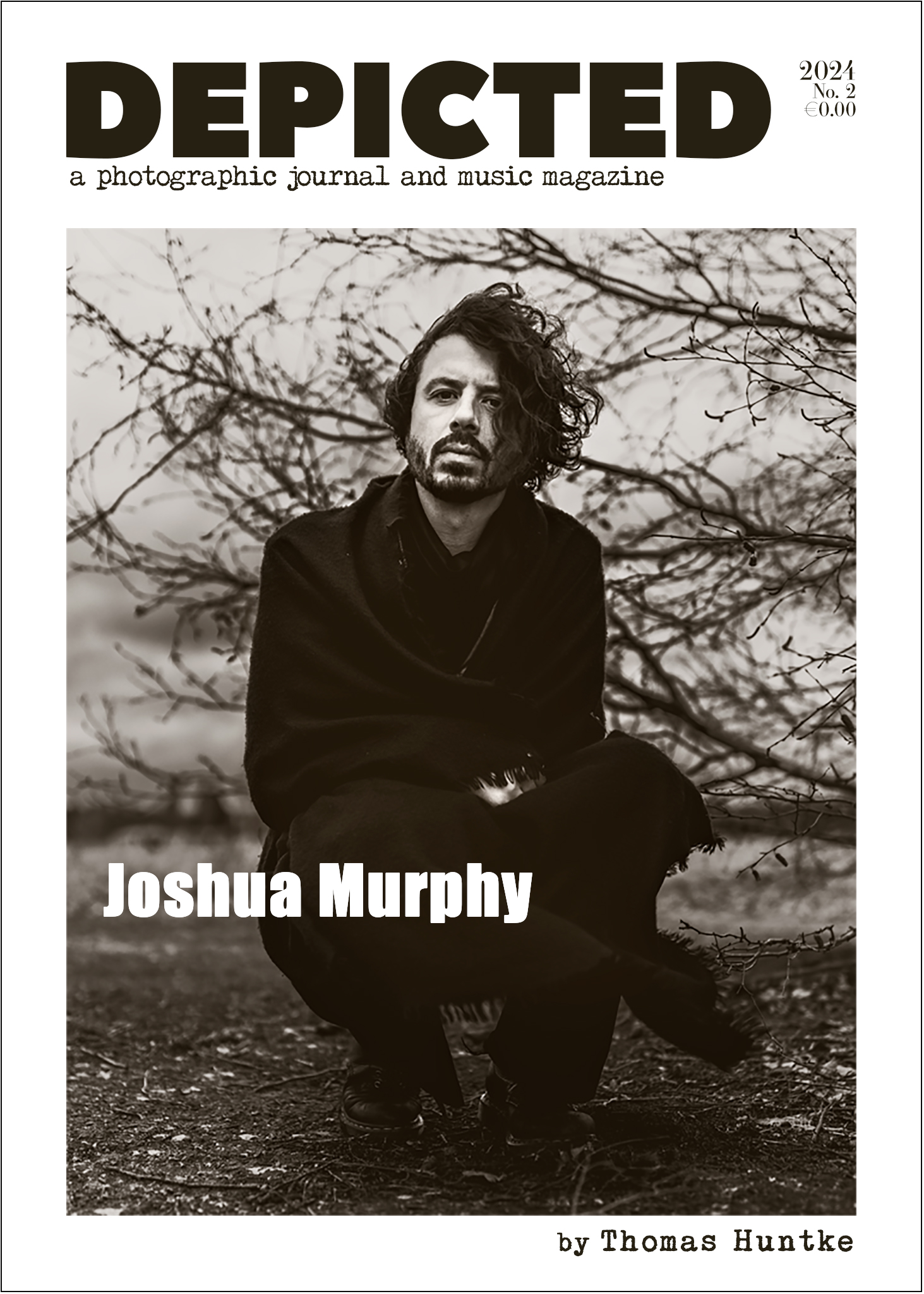
Interview with Joshua Murphy | April 2024
You are from Australia. How did you grow up there? I was born in what is known as rural Australia, about 100 kilometres outside of Melbourne in a place called Tourello. There is nothing there. I was raised on a farm, one hour......
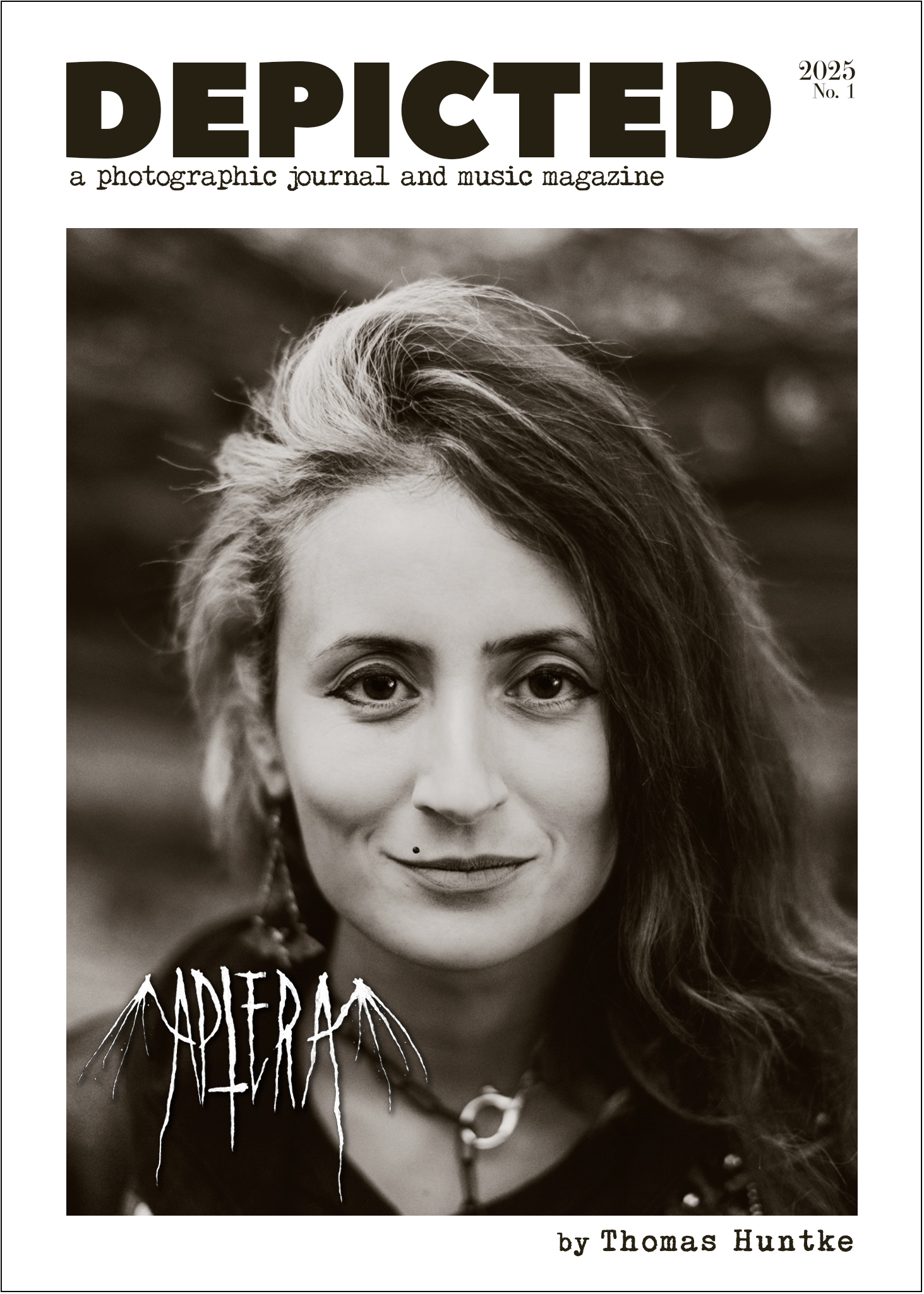
Interview with Michela from APTERA | April 2025
What do I want to talk about? Uncomfortable topic! Lately I was talking with some friends about how, especially in the country where I’m from [Italy], even if you are an agnostic adult person, religion has been, at least to some extent, part......
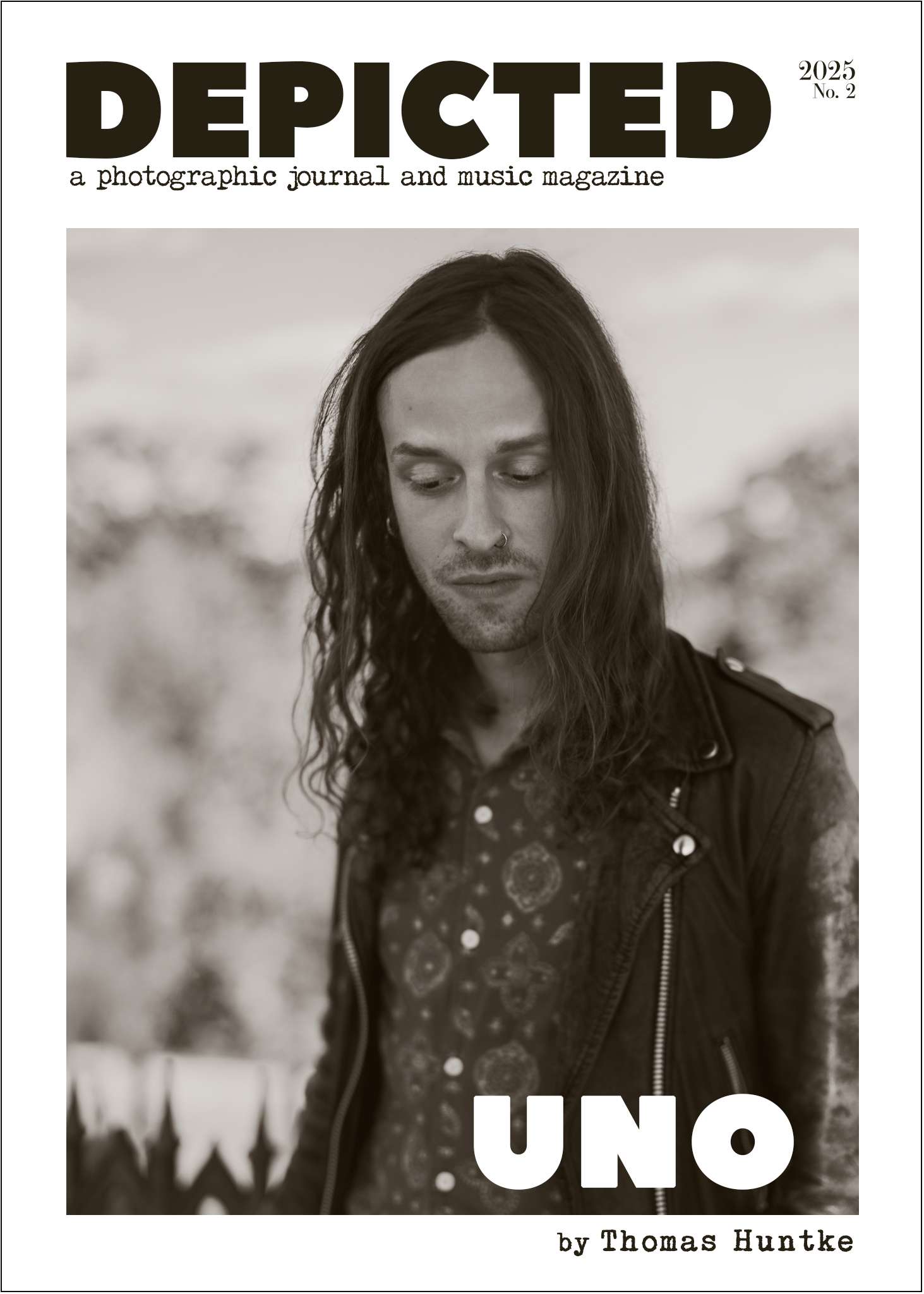
Interview with Uno Bruniusson (Perkwuno, UnoX, Maggot Heart, Delving) | October 2025
For me, you are the guy who plays in a lot of bands and has a lot of projects. So what are the bands you play in right now? What are you doing right now at the moment? There are a few things......
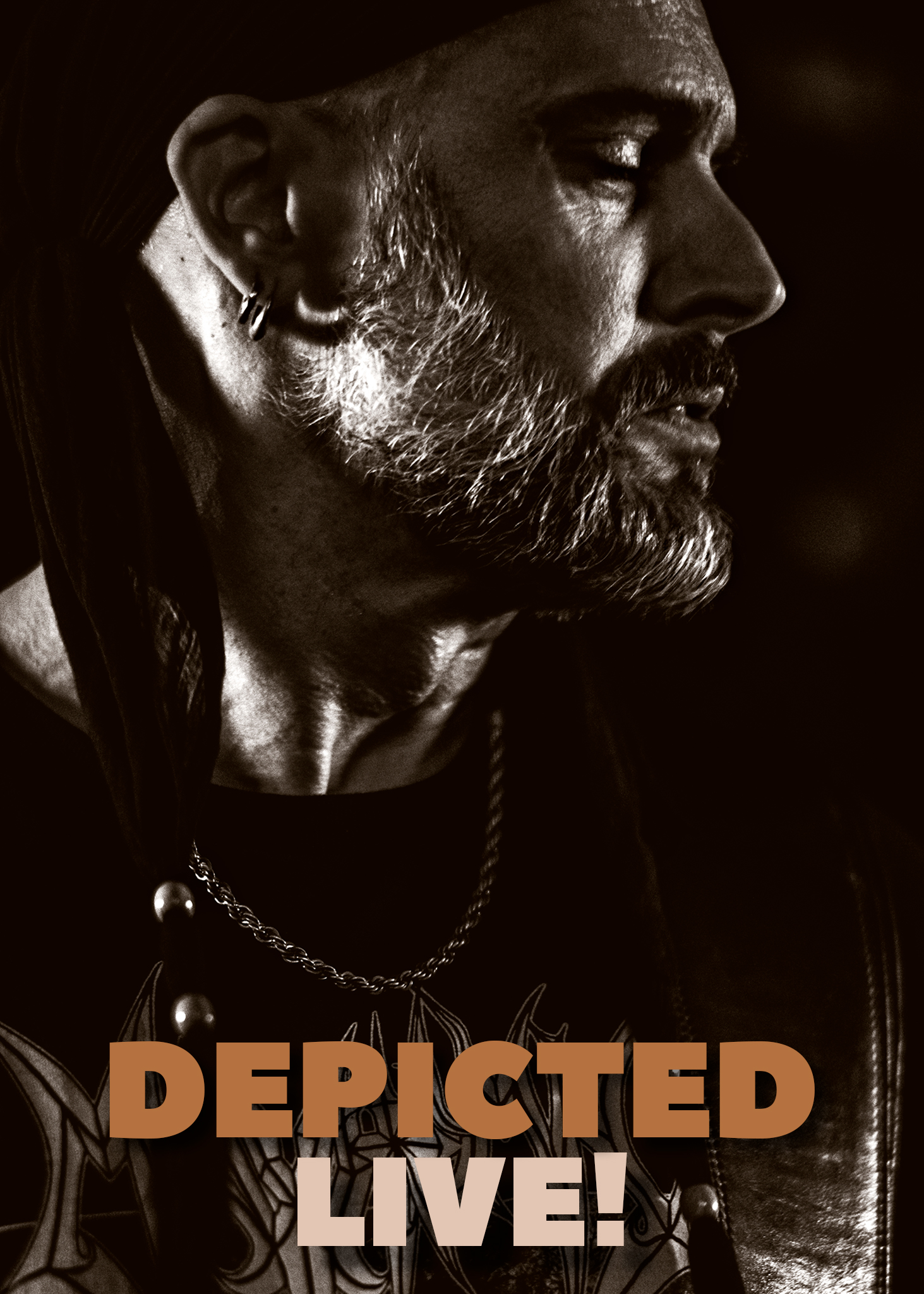
DEPICTED LIVE! – SIJJIN | Berlin, September 2025
DEPICTED LIVE! is a new category on this website, where I present some portrait photos that I shot at live concerts. I’ll kick off this new post format with mighty SIJJIN, live at Neue Zukunft in Berlin, September 28th, 2025. Enjoy. ......
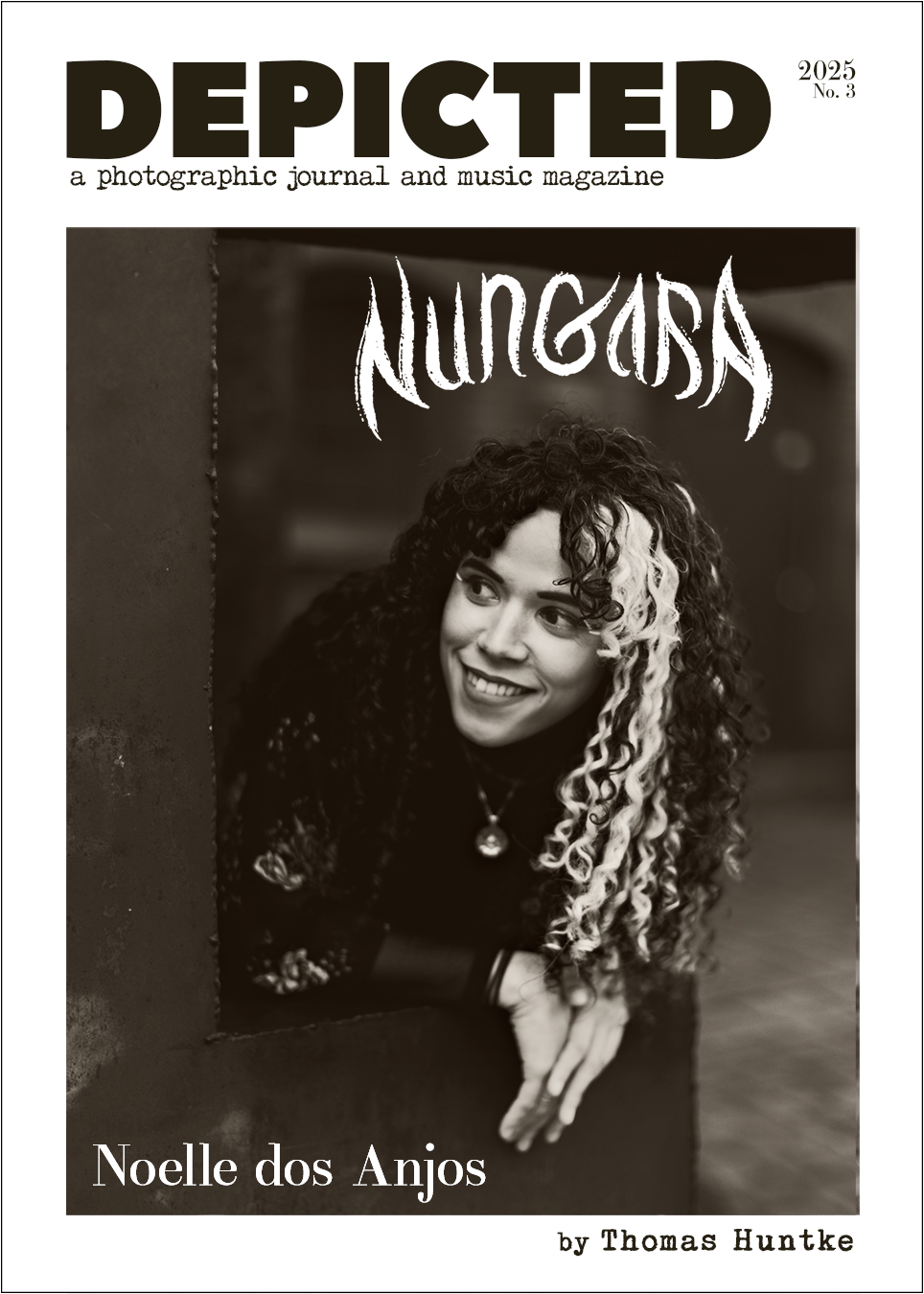
Interview with Noelle dos Anjos of NUNGARA | December 2025
What do you want to talk about? I have been thinking a lot about creativity lately. At the moment I am writing my first album with NUNGARA and I always have this love-hate relationship with making music because I feel like I don’t......
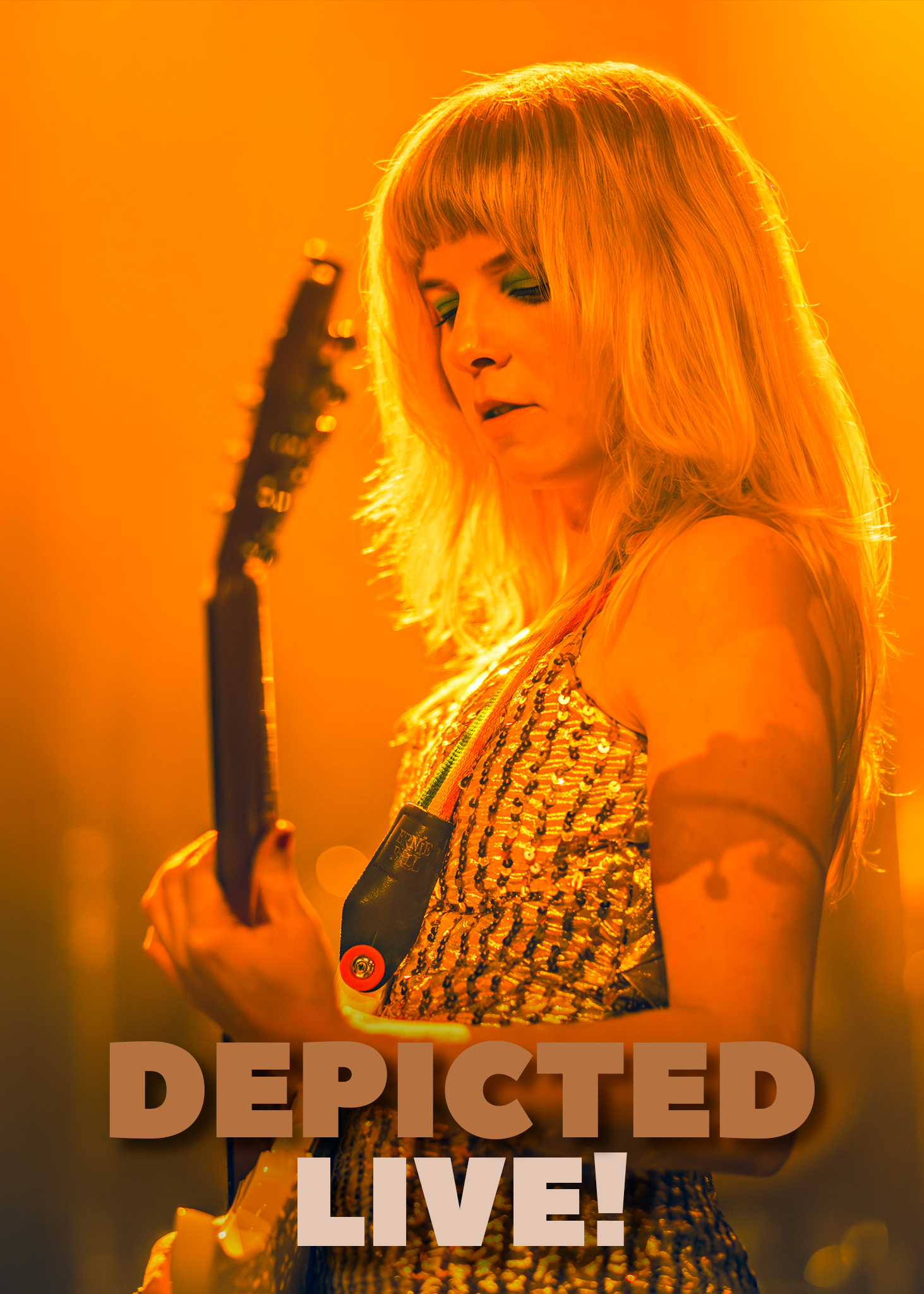
DEPICTED LIVE! – EARTH TONGUE | Berlin, March 2026
DEPICTED LIVE! artist portraits live on stage presents: EARTH TONGUE live at Heimathafen Neukölln in Berlin, March 21th, 2026. (C) DEPICTED Magazine March 2026 No usage of the photos without......
Interview with KARITI | April 2026
Is there something you want to talk about? What’s on your mind? Well, it would be hardly music related. It doesn’t have to be at all music related. Mainly, it’s the world situation. What’s happening right now is very heavy and it’s obviously......
Interview with Tom from KARLOFF | Mai 2026
Let’s go to the beginning of KARLOFF. At that time, you were still in GRAVEYARD GHOUL. What was the incentive for you to say, I’m starting a completely different kind of band now? I was in a death metal band and at some point......

Interview with LILI REFRAIN | July 2026
You are just returning from a long tour. So how do you feel? What were the highlights of the tour? Oh, every day was a highlight because it was my first ever headlining tour, and it was incredibly exciting to present my new album......
Interview with DALILA KAYROS | August 2026
You are from Sardinia. Can you tell us a little bit about the music scene in Sardinia. What is it like? [Danilo]: I’d say there’s a pretty lively scene here, made up of two different attitudes. One is music made for the territory itself,......